
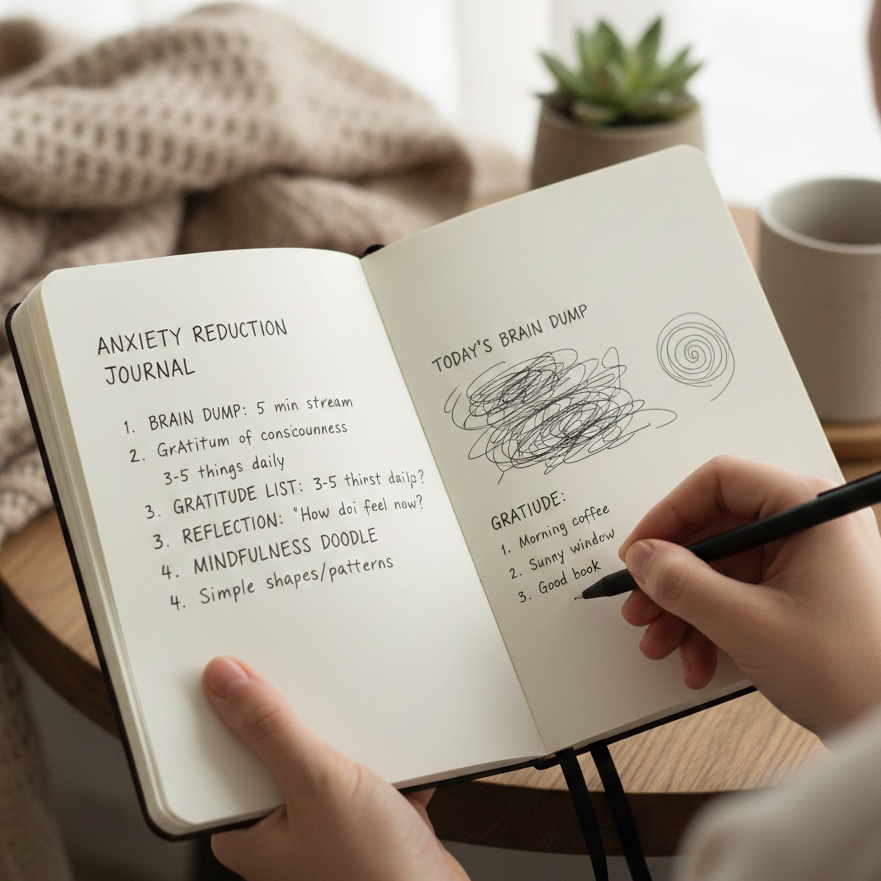
Anxiety is something many of us live with every day. Sometimes it comes as racing thoughts, a heavy chest, fear of the future, or restlessness that doesn’t go away easily. While there are many ways to manage anxiety, journaling is one of the simplest, safest, and most powerful tools you can use.
You don’t need perfect writing skills, a fancy notebook, or long hours. All you need is honesty and a few quiet minutes. Journaling helps you slow down, understand your emotions, and release mental pressure in a healthy way.
Below are simple journaling methods that truly help reduce anxiety when practiced regularly.
1. Brain Dump Journaling
This is the easiest and most effective method for anxious minds.
Brain dump journaling means writing everything that is in your head without filtering. Worries, fears, random thoughts, unfinished tasks, anger, sadness — write it all.
When anxiety builds up, thoughts keep looping in your mind. Writing them down removes them from your head and places them on paper, making your mind feel lighter.
How to do it
Sit comfortably and set a timer for 5 to 10 minutes. Start writing without stopping. Do not worry about grammar or sense. Even if you repeat the same sentence, keep writing. When the time ends, close the notebook.
This method gives your mind relief and clarity almost instantly.
2. Emotion Check-In Journaling
Anxiety often grows because we ignore our emotions.
Emotion check-in journaling helps you identify and name what you’re feeling instead of suppressing it.
How to do it
Start your journal with simple lines like
Right now I feel
My body feels
The thought that is bothering me most is
Write honestly without judging yourself. You may realize that behind anxiety there is fear, loneliness, pressure, or exhaustion.
When emotions are acknowledged, they lose their power.
3. Gratitude Journaling
Anxiety keeps the mind focused on what can go wrong. Gratitude journaling gently shifts your attention to what is still good.
This doesn’t mean ignoring problems. It means balancing your thoughts.
How to do it
Every day write three things you are grateful for. They can be small
A warm cup of tea
A kind message
A moment of rest
Over time, this practice trains your brain to feel safer and calmer.
4. Worry Release Journaling
This method is especially helpful at night when anxiety disturbs sleep.
Worry release journaling allows you to park your worries on paper so your mind can rest.
How to do it
Write down everything you are worried about today. Then next to each worry, write
Is this in my control right now
What is one small step I can take tomorrow
If there is no action possible, write
I allow myself to rest for now
This creates emotional closure and reduces overthinking.
5. Self-Compassion Journaling
Anxious people are often very hard on themselves.
Self-compassion journaling helps you talk to yourself with kindness instead of criticism.
How to do it
Write to yourself as if you were writing to a close friend.
Acknowledge your struggles.
Remind yourself that you are doing your best.
Offer comfort, not pressure.
This method builds emotional safety and reduces inner stress.
Tips to Make Journaling Effective
Write regularly, not perfectly
Be honest, even if it feels uncomfortable
Choose a quiet time, morning or before sleep
Never judge what you write
Keep your journal private so you feel safe
Even 5 minutes a day can make a big difference.
Final Thoughts
Journaling is not about fixing yourself. It is about understanding yourself. When anxiety feels overwhelming, writing gives you a safe space to breathe, release, and heal. You don’t need to change everything at once. Start small. One page. One feeling. One honest sentence. With time, journaling becomes a gentle companion that helps you feel calmer, stronger, and more grounded