
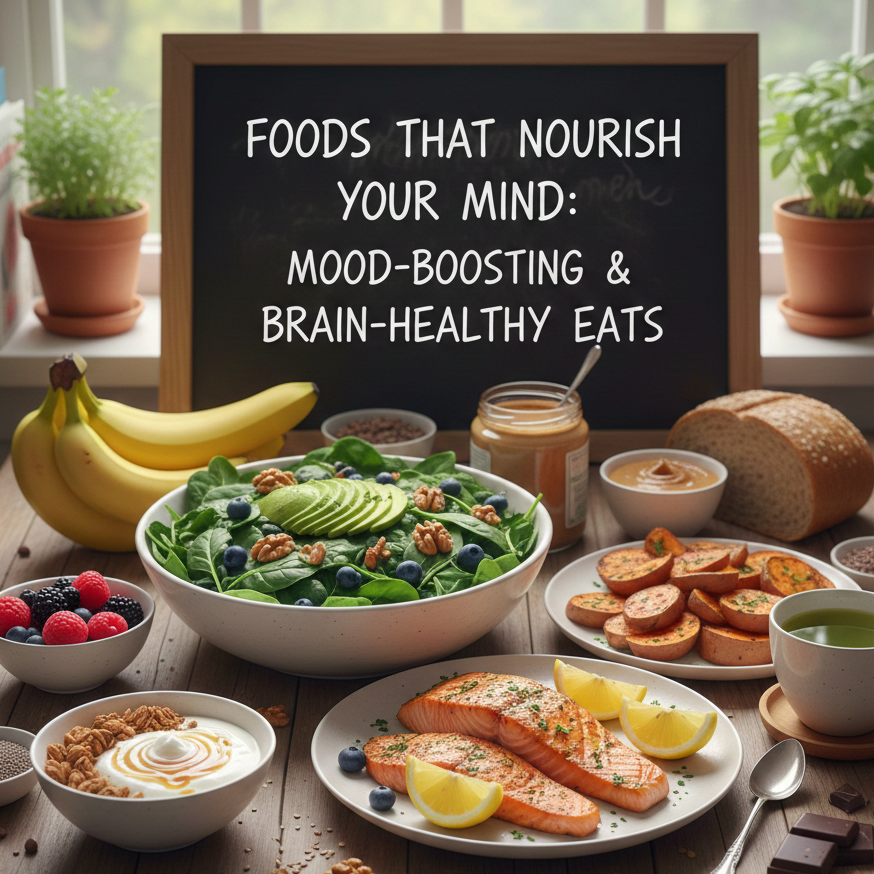
Mental health is not only shaped by thoughts and experiences; what we eat every day also plays a powerful role. The brain needs proper nutrition to stay balanced, focused, and emotionally strong. Certain foods help reduce stress, improve mood, support memory, and lower the risk of anxiety and depression. Making small changes in your daily diet can bring noticeable improvements in how you feel mentally and emotionally.
1. Fatty Fish for Brain Balance
Fatty fish like salmon, sardines, tuna, and mackerel are rich in omega-3 fatty acids. These healthy fats are essential for brain function and emotional stability. Omega-3s help reduce inflammation in the brain and are linked to lower levels of depression and anxiety. Eating fish two to three times a week can support better focus, calmer thoughts, and emotional balance.
2. Nuts and Seeds for Stress Reduction
Almonds, walnuts, flaxseeds, pumpkin seeds, and sunflower seeds contain magnesium, zinc, and healthy fats that support the nervous system. Magnesium helps relax the mind and body, reducing stress and improving sleep quality. Walnuts, in particular, support brain health and memory. A small handful of nuts daily can help you feel more relaxed and mentally strong.
3. Leafy Green Vegetables for Mental Clarity
Spinach, kale, broccoli, and other green vegetables are packed with folate, antioxidants, and vitamins that protect brain cells. Folate deficiency is often linked to low mood and mental fatigue. These vegetables help improve concentration, reduce brain fog, and support emotional well-being. Adding greens to meals daily can bring clarity and mental freshness.
4. Fruits That Boost Mood Naturally
Fruits like bananas, berries, oranges, and apples are rich in vitamins, fiber, and natural antioxidants. Bananas help produce serotonin, a chemical that improves mood and relaxation. Berries protect the brain from stress and aging, while citrus fruits support energy and alertness. Eating fresh fruits regularly helps maintain a positive and stable mood.
5. Whole Grains for Steady Energy
Whole grains such as oats, brown rice, quinoa, and whole wheat provide a steady release of energy to the brain. They help control blood sugar levels, preventing mood swings, irritability, and mental tiredness. Whole grains also support the production of serotonin, helping you feel calm and balanced throughout the day.
6. Fermented Foods for Gut–Brain Health
Foods like curd, yogurt, kefir, and fermented vegetables support gut health, which is closely connected to mental health. A healthy gut produces neurotransmitters that influence mood and stress levels. Probiotic-rich foods can reduce anxiety, improve mood, and support emotional stability.
7. Dark Chocolate for Emotional Comfort
Dark chocolate with high cocoa content contains antioxidants and compounds that boost serotonin and endorphins. In small amounts, it can improve mood, reduce stress, and increase feelings of pleasure. Choosing dark chocolate instead of sugary sweets offers emotional comfort without harming mental health.
8. Herbal Teas for Calmness
Herbal teas like chamomile, green tea, and tulsi help calm the nervous system. Green tea contains L-theanine, which reduces anxiety and improves focus. Chamomile helps relax the mind and improve sleep quality. Drinking herbal tea regularly can bring mental peace and relaxation.
Final Thoughts
Mental health care starts with small daily habits, and food is one of the most powerful tools for emotional well-being. A balanced diet rich in natural, whole foods supports brain function, reduces stress, and promotes positive emotions. While food alone is not a cure, it plays a strong supportive role in maintaining mental peace and emotional strength. Nourish your mind by nourishing your body.