
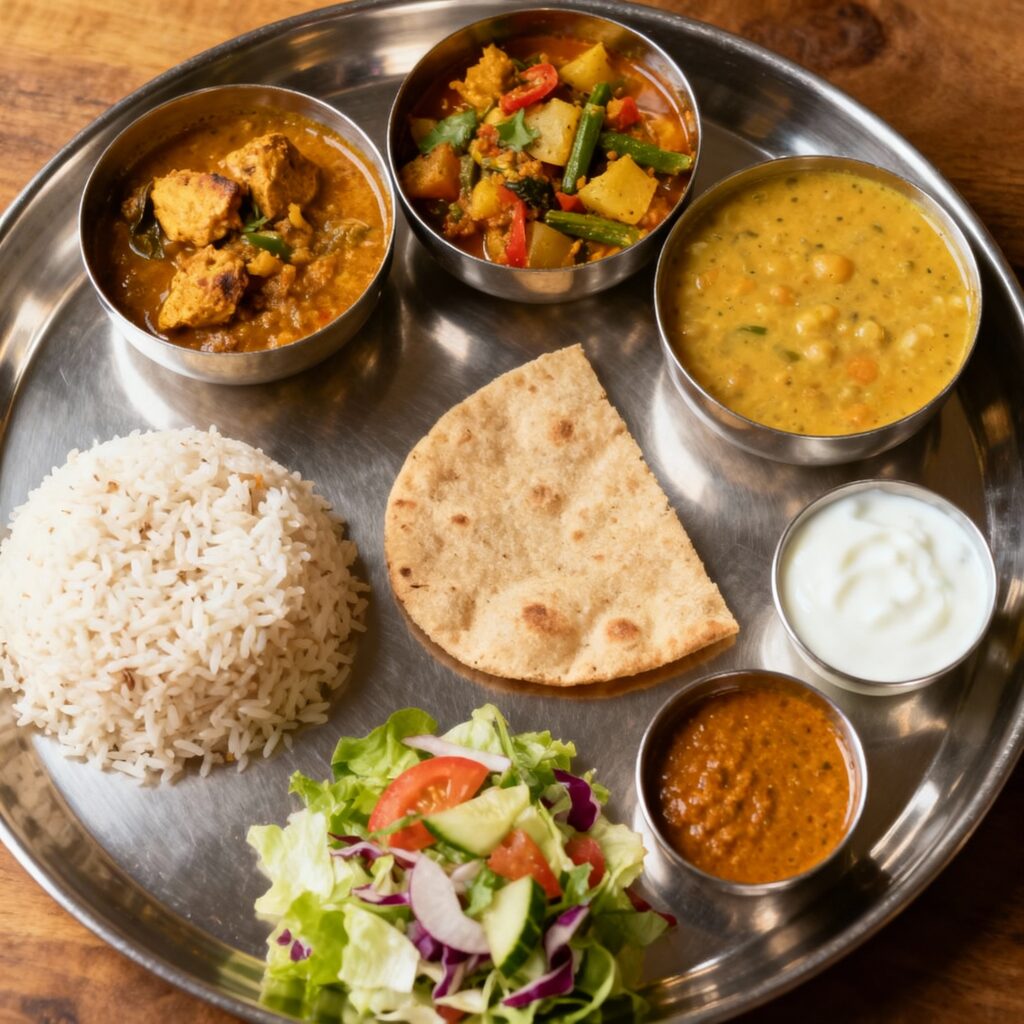
Food in India is not just about eating—it’s about tradition, celebration, and a feeling of togetherness. The Indian thali (a complete meal served on one plate) is one of the best examples of this culture. A traditional thali includes dal, sabzi, roti, rice, pickle, salad, papad, curd, and often a sweet dish. It is colorful, flavorful, and full of variety. But here’s the challenge: in today’s world of sedentary jobs, fast-paced lifestyles, and modern health concerns like obesity, diabetes, and fatigue, can the thali still fit into modern nutrition needs?
The answer is yes—but with balance and smart choices. Let’s explore how we can redesign the Indian thali to stay true to tradition while also matching modern health goals.
The Indian Thali: A Cultural Treasure
The beauty of a thali is balance. It naturally offers a mix of tastes—sweet, salty, sour, bitter, and spicy—and covers different food groups. Ayurveda has always said that a balanced diet is one that nourishes not only the body but also the mind and soul. The problem today is not the thali itself, but the portions and ingredients we use. Too much rice, fried foods, and sweets, and too little vegetables and proteins—that’s where the imbalance happens.
Step 1: Make Grains Smarter
Traditionally, a big portion of the thali is rice or wheat roti. These are fine in moderation, but polished white rice or refined wheat flour (maida) are low in fiber and spike blood sugar quickly.
Modern twist:
- Switch to whole wheat, multigrain, or millet rotis (jowar, bajra, ragi).
- Try brown rice, red rice, or quinoa instead of only white rice.
- Keep grains to one-quarter of your thali instead of half.
This way, you still enjoy the comfort of grains but with steady energy and better digestion.
Step 2: Double the Vegetables
In many homes, sabzi (vegetable curry) is a small side dish, while rice or roti take center stage. But modern nutrition says—make veggies the hero of your plate.
Tips for modern thali:
- Fill half your plate with vegetables.
- Use different colors: leafy greens, carrots, beets, capsicum, pumpkin, etc.
- Go for simple cooking—steamed, sautéed, or lightly spiced instead of deep-fried.
- Add a raw salad or raita for freshness and extra fiber.
Vegetables provide vitamins, minerals, antioxidants, and fiber—exactly what today’s lifestyle demands.
Step 3: Protein—The Missing Piece
A common problem in vegetarian thalis is lack of protein. Dal is there, but often in small amounts. Without enough protein, people feel hungry quickly and may overeat carbs.
Modern solutions:
- Increase the portion of dal, rajma, chole, or sprouts.
- Add curd, paneer, tofu, or buttermilk.
- Non-vegetarians can include egg curry, chicken curry, or grilled fish.
- Even nuts and seeds sprinkled on sabzi or salad add extra protein.
Aim for at least one good protein source in every meal.
Step 4: Healthy Fats, Not Heavy Ones
Indian food loves its oils, ghee, and fried snacks. But the type and quantity of fat matters. Ghee, when used in small amounts, is healthy. The problem is excess frying, especially with refined oils.
Balanced fat ideas:
- Use 1 teaspoon of ghee on roti or rice—it adds flavor and nutrition.
- Cook with cold-pressed oils (mustard, coconut, sesame, or groundnut oil).
- Include nuts, seeds, and avocado as natural fat sources.
- Limit deep-fried foods to occasional treats, not daily staples.
Healthy fats help in hormone balance, brain health, and keeping you satisfied after meals.
Step 5: Rethink Sweets & Pickles
No thali feels complete without a sweet or a tangy pickle. But here is where moderation becomes crucial.
- Instead of creamy sweets or deep-fried desserts, try small servings of kheer made with jaggery, fruit custard, or dates-based laddoo.
- Pickles are great for taste, but they are high in salt and oil. A teaspoon is fine, but don’t let it dominate your plate.
The key is enjoying traditional flavors while being mindful of health.
Step 6: Hydration & Mindful Eating
Another important part of modern nutrition is how we eat, not just what we eat. Sip buttermilk, lemon water, or plain water along with your thali. Avoid aerated drinks or too much packaged juice. And eat slowly—give your body time to recognize fullness.
The Perfect Modern Indian Thali (Example)
Here’s how a balanced plate might look:
- Half Plate: Mixed vegetable sabzi (lightly cooked) + raw salad
- Quarter Plate: 1-2 multigrain rotis or a small portion of brown rice
- Quarter Plate: A bowl of dal / sprouts / paneer / fish curry (protein)
- Extras: 1 tsp pickle, a small papad, and a teaspoon of ghee
- Sweet Treat: One small piece of jaggery or fruit-based dessert
This thali is colorful, satisfying, rooted in tradition, and yet aligned with modern science.
Final Thoughts
Balancing an Indian thali for modern nutrition is not about cutting out what we love—it’s about portion control, variety, and smarter swaps. Our ancestors already designed the thali to be complete; we only need to adjust it to suit today’s lifestyle.
When your plate has more vegetables, the right amount of protein, whole grains, healthy fats, and just a little indulgence—you are not only eating for taste but also for long-term health.
So next time you sit down for a thali, remember: your plate is your daily medicine, your energy, and your connection to culture.