
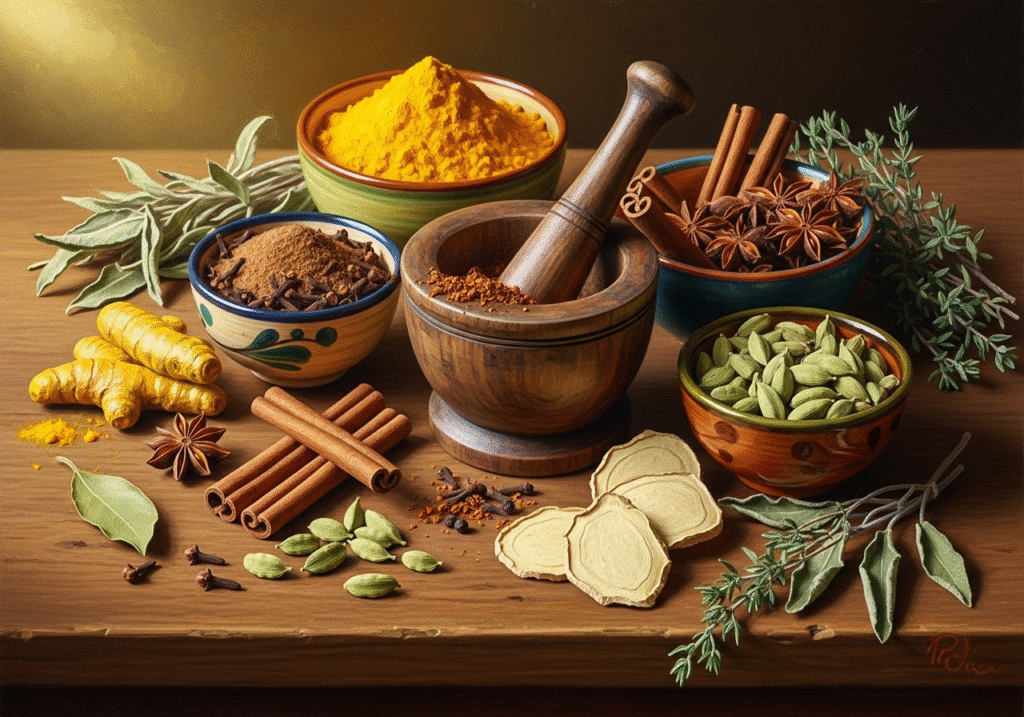
🌿 Why Kitchen Spices Are Nature’s Medicine
In every Indian household, the spice box holds more than flavor—it holds ancient Ayurvedic wisdom. Turmeric, ajwain, cinnamon, ginger, and fennel are everyday treasures often overlooked, yet they have powerful medicinal benefits. These spices naturally support digestion, immunity, inflammation, joint health, and blood sugar balance, making them a simple yet effective way to improve health.
🌟 Healing Spices and Their Benefits
1. Ajwain (Carom Seeds)
- Relieves gas, bloating, and indigestion
- Boiled ajwain water soothes stomach pain instantly
2. Turmeric
- Rich in curcumin, a natural anti-inflammatory
- Boosts immunity, aids digestion, supports joint health
- Traditional remedy for wound healing and blood purification
3. Cinnamon
- Regulates blood sugar levels
- Supports heart health by reducing cholesterol
- Relieves sinus congestion and aids digestion
4. Black Pepper
- Enhances nutrient absorption
- Stimulates digestion and detoxification
- Mixed with honey, it’s a time-tested cough remedy
5. Ginger
- Relieves nausea and motion sickness
- Reduces muscle pain and strengthens immunity
- Ginger tea is perfect for colds and digestive support
6. Fenugreek
- Traditionally used for diabetes management
- Improves digestion and reduces oxidative stress
- Supports heart health and metabolic balance
7. Mustard Seeds
- Help in detoxifying the body
- Relieve muscular pain
- Beneficial for respiratory disorders
8. Fennel Seeds
- Ease bloating and indigestion
- Freshen breath naturally
- A popular digestive after meals
🥄 Easy Ways to Add Spices to Daily Life
- Drink turmeric milk at night for inflammation relief
- Sip ajwain water after heavy meals for digestion
- Add cinnamon to porridge, tea, or smoothies for blood sugar control
- Mix black pepper with honey to soothe coughs
- Enjoy ginger tea for immunity and nausea relief
- Soak fenugreek seeds overnight and add to dals or salads
- Temper curries with mustard seeds for flavor and health
- Chew fennel seeds after meals for digestive support
🌸 Ayurveda in the Kitchen: Ancient Wisdom for Modern Life
According to Ayurveda, food is the first medicine. By using spices consciously, you embrace natural healing that is:
- Affordable (already in your kitchen)
- Safe (when used in moderation)
- Holistic (supports body, mind, and spirit)
Instead of relying only on supplements, rediscover the hidden treasures of your spice box—because your kitchen can truly be your first pharmacy.
✅ Pros & ⚠️ Cons of Using Healing Spices
Pros:
- Natural, chemical-free healing
- Easily available and inexpensive
- Multipurpose health benefits
Cons:
- Overuse can cause side effects (e.g., too much cinnamon may affect the liver)
- Not a substitute for prescribed medical treatment
- Some people may have spice allergies
❓ FAQs on Healing Kitchen Spices
Q1. Which spice is best for immunity?
Turmeric and ginger are powerful immunity boosters backed by both Ayurveda and modern science.
Q2. Can spices cure diseases?
Spices support healing and prevention but should not replace medical treatment. They work best as part of a healthy lifestyle.
Q3. Is it safe to eat spices every day?
Yes, when consumed in moderation through daily meals. Avoid excessive use of any single spice.
Q4. What’s the best way to use spices for digestion?
Ajwain water, fennel seeds after meals, and ginger tea are the most effective digestive aids.
✨ Final Takeaway:
Your spice box is a treasure chest of healing. A pinch of turmeric, a spoon of ajwain water, or a cup of ginger tea can do more for your health than you imagine. By weaving these spices into daily cooking, you follow the path of Ayurveda—simple, natural, and powerful wellness at home.
www.flatfat.in